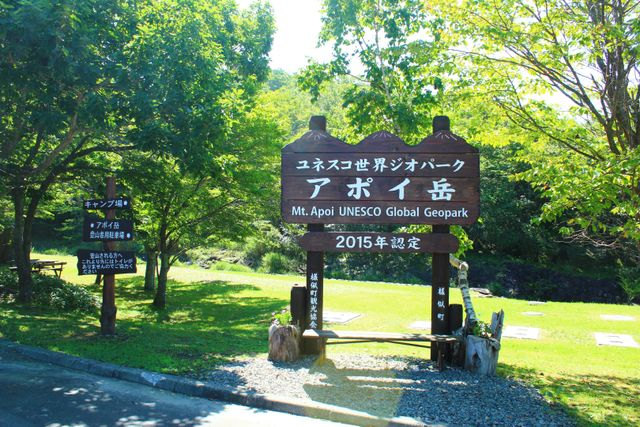
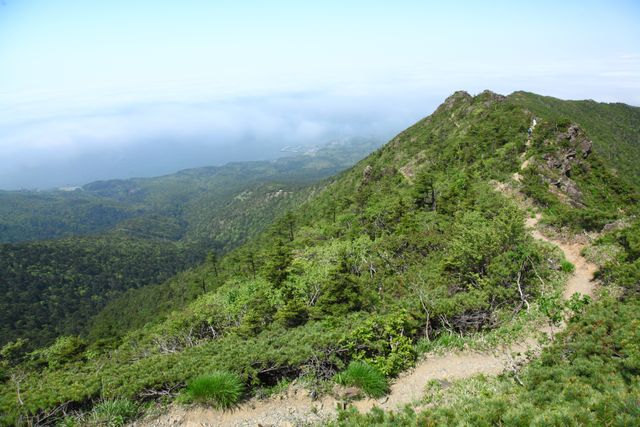
Apoi-dake is a treasure trove of flowers, with a profusion of alpine plants despite its low elevation of 810 meters. Its precious ecosystem, born from the unique geological formation of peridotite, is designated a Special Natural Monument of Japan.
Apoi-dake is a mountain located at the southwestern tip of the Hidaka mountain range in southwestern Hokkaido. Its elevation is 810.5 meters. Situated at the southwestern end of the Hidaka mountain range's sub-ridges, it features a first-order triangulation point (named "Fuyushima").
Apoi-dake is composed of peridotite, a unique rock formation. Peridotite is a major constituent of the Earth's mantle, and on Apoi-dake, it is exposed on the surface. This peridotite is extremely hard and resistant to weathering, resulting in Apoi-dake's steep terrain compared to other mountains.
Because peridotite creates soil unsuitable for most plants, Apoi-dake provides an environment conducive to alpine plants. Approximately 80 species of alpine plants thrive here, including several species found nowhere else.
Apoi-dake is a relatively easy climb, even for beginners. The trails are well-maintained and relatively easy to navigate. However, some sections include rocky areas and steep slopes, requiring caution. From the summit, you can enjoy magnificent views of the Hidaka mountain range and the Pacific Ocean.
Apoi-dake is known as the "Apoi-dake Alpine Plant Community," designated a Special Natural Monument of Japan, and also selected as one of Japan's 100 Geological Wonders. It's also listed among the "100 Famous Mountains for Flowers," "New 100 Famous Mountains for Flowers," and "Hokkaido's 100 Famous Mountains."
Apoi-dake is a natural treasure trove. You can witness precious alpine plants and the unique geology of peridotite.
 Favorite