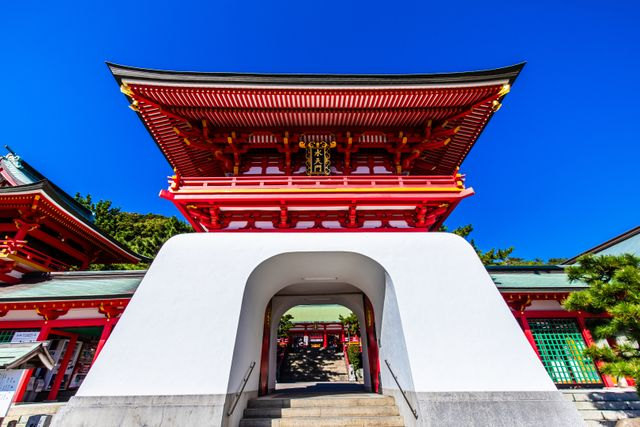
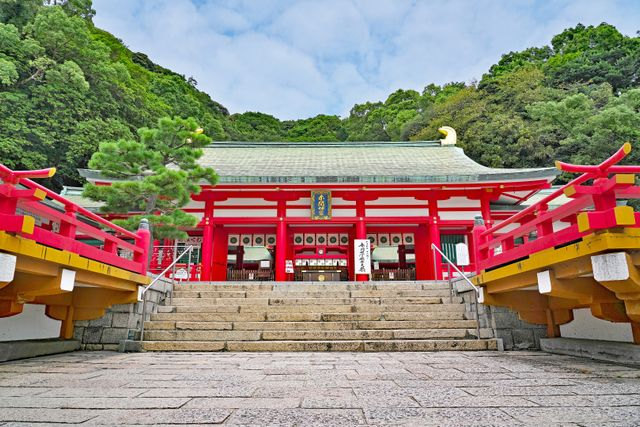
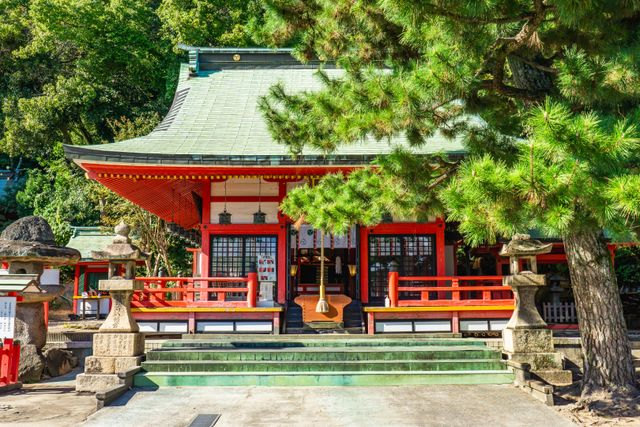
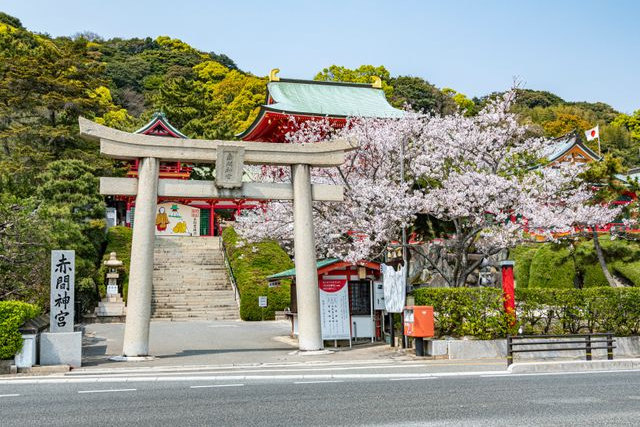
Known as a "Land Dragon Palace," Akama Shrine enshrines Emperor Antoku, a tragic child emperor. Its vibrant vermilion Suitenmon Gate stands majestically against the Kanmon Strait, creating a unique power spot steeped in history and mystery.
Shrines and Temples
Historic Sites
Cultural Assets
National Treasure
Scenic Views
Night Views
Cultural Arts
📷
No image
📷
No image
📷
No image
📷
No image
📷
No image
📷
No image
📷
No image
📷
No image
Loading...
Highlights
The vibrant vermilion Suitenmon Gate, modeled after the Dragon Palace
The Imperial Mausoleum where the tragic child Emperor Antoku rests
Hoichi-do Hall, the setting for the ghost story "Hoichi the Earless"
Shichimozuka, the memorial mounds for the Heike clan who perished in the Battle of Dan-no-ura
From JR Shimonoseki Station, take a 9-minute ride on the Sanden Kotsu Bus and alight at the "Akama Shrine-mae" bus stop. From Karato Bus Stop, take a 2-minute ride on the Sanden Kotsu Bus and alight at the "Akama Shrine-mae" bus stop. For those arriving by car, three free parking lots are available across the road on the ocean side. Show route
Op.Hours
9:00 AM - 5:00 PM (Treasure Hall: 9:00 AM - 4:30 PM)
Fee
Treasure Hall: 100 JPY
INFO
Three free parking lots are conveniently located across the road on the ocean side. This shrine proudly hosts the Sentei-sai Festival as its main venue every year on May 3rd. As night falls, the grounds are beautifully illuminated. Don't miss the unique light blue post box near the torii gate, decorated with a charming pufferfish (fugu) ornament. Please be sure to note the closing time.
Nestled in Shimonoseki, Yamaguchi Prefecture, Akama Shrine is a revered Shinto shrine dedicated to Emperor Antoku, who tragically drowned at the tender age of eight during the Battle of Dan-no-ura, the final showdown of the Genpei War. Its history dates back to 859 (Jogan 1), when it was originally founded as Amidaji Temple. It became a shrine following the Shinbutsu Bunri (separation of Shinto and Buddhism) decree during the Meiji period and was renamed Akama Shrine in 1940.
Its greatest attraction is the vividly vermilion "Suitenmon Gate," said to be modeled after Ryugu-jo, the legendary Dragon Palace. Standing majestically against the backdrop of the Kanmon Strait's blue waters, its magnificent presence is famously recognized as a symbol of Shimonoseki, offering a breathtaking view that's sure to make you reach for your camera. At night, it's illuminated, offering a fantastical beauty distinct from its daytime appearance.
Within the shrine grounds, you'll find the "Amidaji Imperial Mausoleum of Emperor Antoku," where Emperor Antoku rests peacefully, and the "Shichimozuka," memorial mounds for the Heike clan, both quietly recounting the tragedy of Dan-no-ura. The "Shichimozuka" in particular is believed to have been erected to appease the vengeful spirits of the Heike clan, who were thought to be responsible for the frequent maritime accidents that occurred after the Battle of Dan-no-ura. Its historical background is deeply moving.
Furthermore, Amidaji Temple, the predecessor of Akama Shrine, is well-known as the setting for Lafcadio Hearn's ghost story "Hoichi the Earless." Within the precincts stands "Hoichi-do Hall" with a statue of Hoichi playing the biwa, evoking an atmosphere as if he is still playing and singing for the Heike ghosts. The Treasure Hall houses valuable documents and important cultural properties related to the Genpei War, making it an irresistible spot for history enthusiasts.
Every year on May 3rd, the "Sentei-sai Festival" is held to commemorate Emperor Antoku, featuring the breathtaking "Joro Sanpai" procession where courtesans (tayū) in magnificent costumes walk in a distinctive "Soto-Hachimonji" (figure-eight) style. Visitors can witness a beautiful and solemn Shinto ritual imbued with prayers for the repose of the child emperor, whose life was marked by tragedy.
As Niidono, wife of Taira no Kiyomori, is said to have recited, "There is a capital even in the sea," as she held Emperor Antoku and plunged into the waters. The more you delve into the history of this place, the more you will be drawn to the mystical charm of Akama Shrine. Why not spend a special time immersing yourself in the romance of history, feeling the sea breeze of the Kanmon Strait?
 Favorite