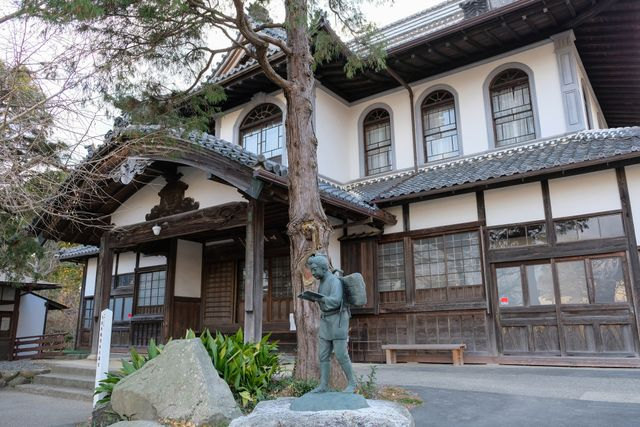
The Former Totomi-koku Hodokusha Public Hall (Dai-Nippon Hodokusha Grand Hall), a symbolic structure of the Dai-Nippon Hodokusha, which inherits the Hodoku philosophy of Nakaoka Sontoku, was built in 1903 (Meiji 36). At that time, the Hodoku movement was spreading throughout Japan, and the construction of this public hall served as a vital hub. The architectural style is a fusion of traditional Japanese and Western styles, showcasing the height of architectural technology of the time. Features include a tiled roof, plaster walls, and Western-style round windows. The grand hall, boasting an impressive 81 tatami mats (approximately 135 square meters), features a high ceiling and open space, creating an airy atmosphere and serving as a place to pass down the Hodoku philosophy. Even today, it hosts various events, including regular meetings, lectures, and workshops, playing a vital role in disseminating the Hodoku philosophy. The surrounding area also houses a museum and library dedicated to the Hodoku philosophy, making it a valuable location for experiencing history and culture. A visit to the Former Totomi-koku Hodokusha Public Hall provides a deep understanding of the flourishing Hodoku movement in modern Japanese history and its enduring influence on contemporary society.
 Favorite