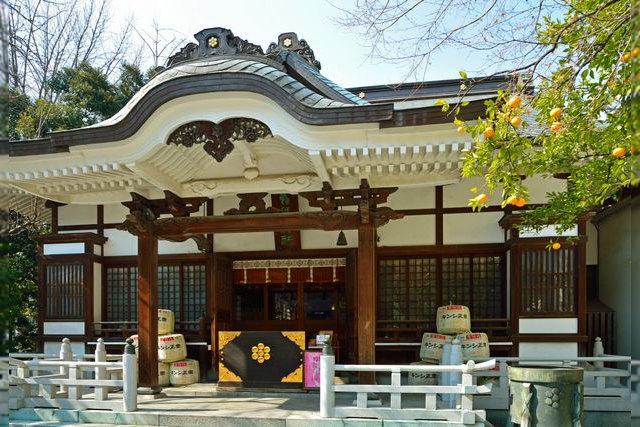
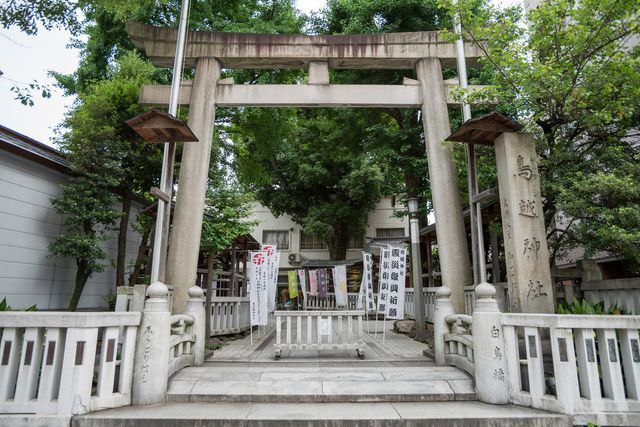
Torigoe Shrine, a historic shrine with over 1,000 years of history, is famous for its "Senkan Mikoshi," said to be the heaviest portable shrine in Tokyo. Its peaceful and tranquil atmosphere makes it a perfect escape from the hustle and bustle of the city.
Shrines and Temples
📷
No image
📷
No image
📷
No image
📷
No image
Loading...
Highlights
Over 1,000 years of history
The "Senkan Mikoshi," said to be the heaviest portable shrine in Tokyo
Peaceful and tranquil atmosphere
A quiet escape from the city's bustle
Blessings for military success, national peace, and good fortune
Walkable from Kuramae Station. Also accessible via the Taitou Ward loop bus "Minami Megurin" from Nippori Station and Asakusabashi Station, or the "Gururi Megurin" from Asakusa Station and Tawaramachi Station. Show route
Op.Hours
6:00 AM - 5:00 PM
Cld.Days
None
Fee
Free
INFO
The grounds are mostly flat and paved with stone, making them easy to navigate. A temizuya (a ritual hand-washing pavilion) is located at a bend in the approach path, and the main hall is just a short distance beyond, making it easy for a quick visit.
The enshrined deity is Yamato Takeru no Mikoto, with Tokugawa Ieyasu (also known as Tosho Daigongen) enshrined alongside. Therefore, the main blessings are believed to be for national peace and tranquility, military success, and victory.
There are also several sub-shrines within the grounds, each offering their own distinct blessings.
Furthermore, it is said to house the largest portable shrine (mikoshi) in Tokyo, known as the Senkan Mikoshi. It is apparently unveiled during the annual festival.
Torigoe Shrine, located in Taitou-ku, Tokyo, boasts a history spanning over a millennium.
Its founding is traditionally dated to 651 AD, and it enshrines Yamato Takeru, a legendary hero of ancient Japan. According to tradition, Yamato Takeru designated this place as a sacred site and enshrined the two great deities of the Imperial ancestors.
Later, during the conquest of the Northern Fujiwara rebellion (Zenkunen no Eki), Minamoto no Yorinobu and his son Yoshiie passed through this area. Seeing a white bird fly, they discovered a shallow part of the river, enabling them to cross the Sumida River. Attributing this to the protection of the white bird deity, they dedicated the shrine under the name Torigoe Daimyojin.
During the Edo period, Torigoe Shrine comprised three shrines and possessed vast grounds covering approximately 20,000 tsubo (a traditional Japanese unit of area). However, in 1620, the Edo Shogunate initiated the construction of storehouses (Asakusa Gizo) along the Sumida River to store rice from the government-owned lands throughout the country. This required the leveling of Torigoeyama, the hill where the shrine was located, resulting in the confiscation of its land. Furthermore, Himegaike Pond, located north of the main shrine, was filled in with earth from Torigoeyama to create land for daimyo mansions and other government properties.
Of the three shrines, Atago Shrine was moved to Imoto, and the Sixth Heaven Sakaki Shrine to Morita-cho (present-day Kuramae 3-chome). The remaining Daimyojin became the present-day Torigoe Shrine.
The atmosphere within Torigoe Shrine is serene and tranquil, offering a welcome respite from the urban clamor.
Torigoe Shrine possesses the "Senkan Mikoshi," reputedly one of the heaviest portable shrines in Tokyo. This mikoshi is paraded through the local district during the annual festival held in June.
Torigoe Shrine is also an excellent place for a leisurely stroll while soaking up the historical ambience. We highly recommend a visit.
 Favorite