【Car】 Approximately 20 minutes from Okayama Sōja IC on the Okayama Expressway to the Kinojō Visitor Center. A 15-minute walk from there to the West Gate.
※ Please note that the approximately 3km stretch of road from Sunagawa Park to the Kinojōyama Visitor Center parking lot is narrow.
※ Only small buses with a width of 2.1m and a length of 7m or less are permitted.
【Public Transportation】 Approximately 20 minutes by taxi from JR Sōja Station. A 15-minute walk from there to the West Gate. Show route
Op.Hours
9:00 AM - 5:00 PM (Onijyōzan Visitor Center)
Cld.Days
Mondays (the following day if a national holiday falls on a Monday), December 29th - January 3rd
Fee
Free
INFO
Parking is available for 30 standard-sized cars. Small buses can access the parking lot. Large buses must park at Sunagawa Park at the foot of the mountain (13 parking spaces available).
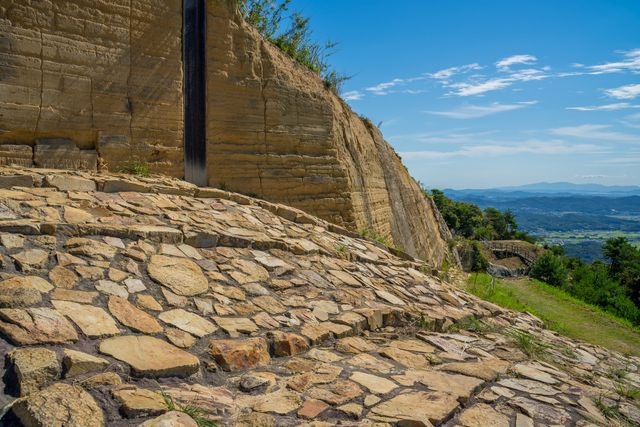
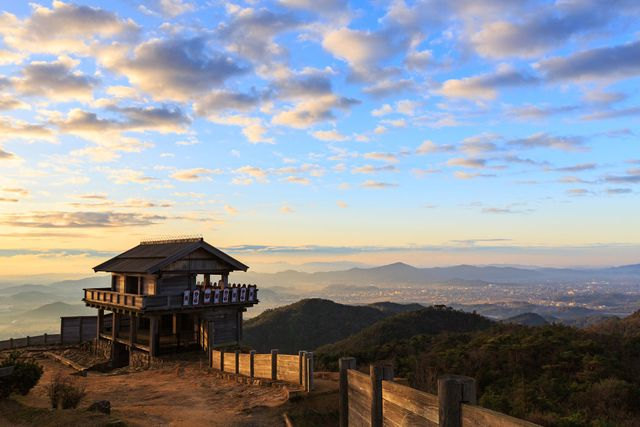
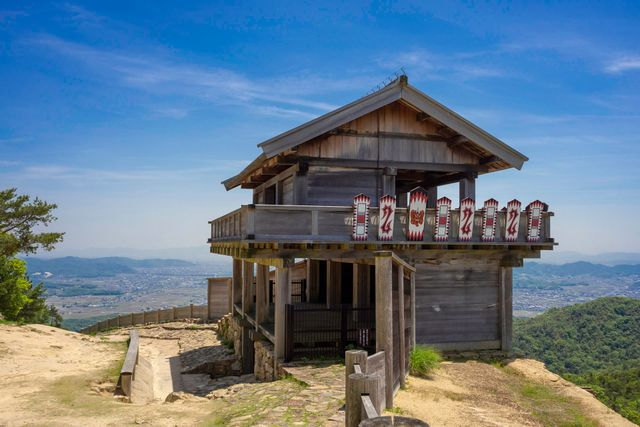
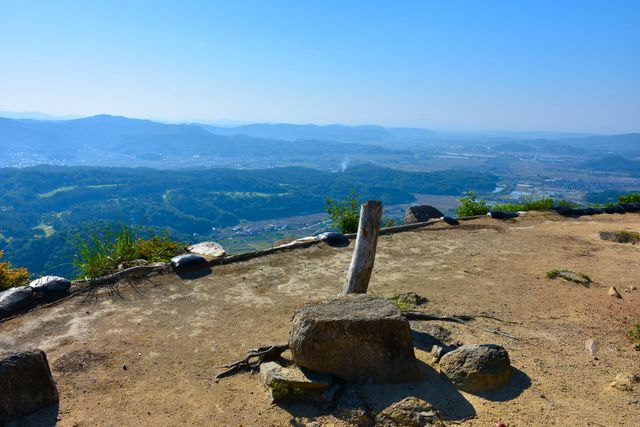
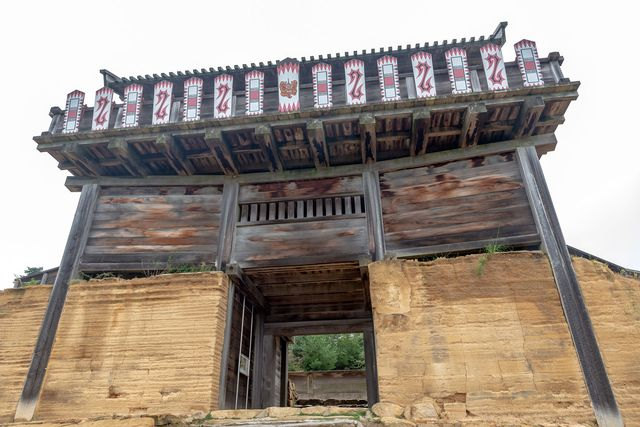
Kinojō is one of the defensive structures built by the Yamato court along crucial routes from Tsushima Island, facing the Korean Peninsula, to Kinai (the area around modern-day Nara and Kyoto) for the defense of Wa (Japan). While the construction date is unknown, excavation surveys suggest it was built in the late 7th century. Located at the southern end of the Kibiki Plateau, Kinojō sits atop Kinojōyama, a mountain with a summit at 397 meters above sea level. Stone and earth ramparts encircle the mountain's 7th to 9th slopes, stretching 2.8 kilometers, forming a ring around the mountain. The walled area covers approximately 30 hectares. The walls mainly consist of earthen ramparts, incorporating four gates, corner towers, and six water gates. The discovery of paving stones to protect the walls is a first in Japan. Within the castle, seven stone foundation building sites, one post-and-pillar building site, reservoirs, signal fires, and blacksmithing remains have been identified. Kinojō is remarkably complete, possessing nearly all the necessary facilities for a mountain castle; this is quite rare, as many other mountain castles remain unfinished. Based on the principle of a "field museum of history and nature," the West Gate, corner towers, and earthworks have been restored. Other improvements include the gates, water gates, stone foundation building sites, viewpoints, walking paths, the "Kinojōyama Visitor Center," and parking, opening the site to the public as a "historical site and nature park." It's believed that people of Korean descent who had settled in the local area were mobilized for the construction of this unique ancient mountain castle. Furthermore, the unearthed pottery suggests construction around 667 AD is plausible. Considering the layout and structure of castles in Kyushu and along the Seto Inland Sea coast, these structures were likely built as a cohesive, planned national project undertaken by Japan in the late 7th century.
 Favorite